Image Credit: The East Palace/ Netflix
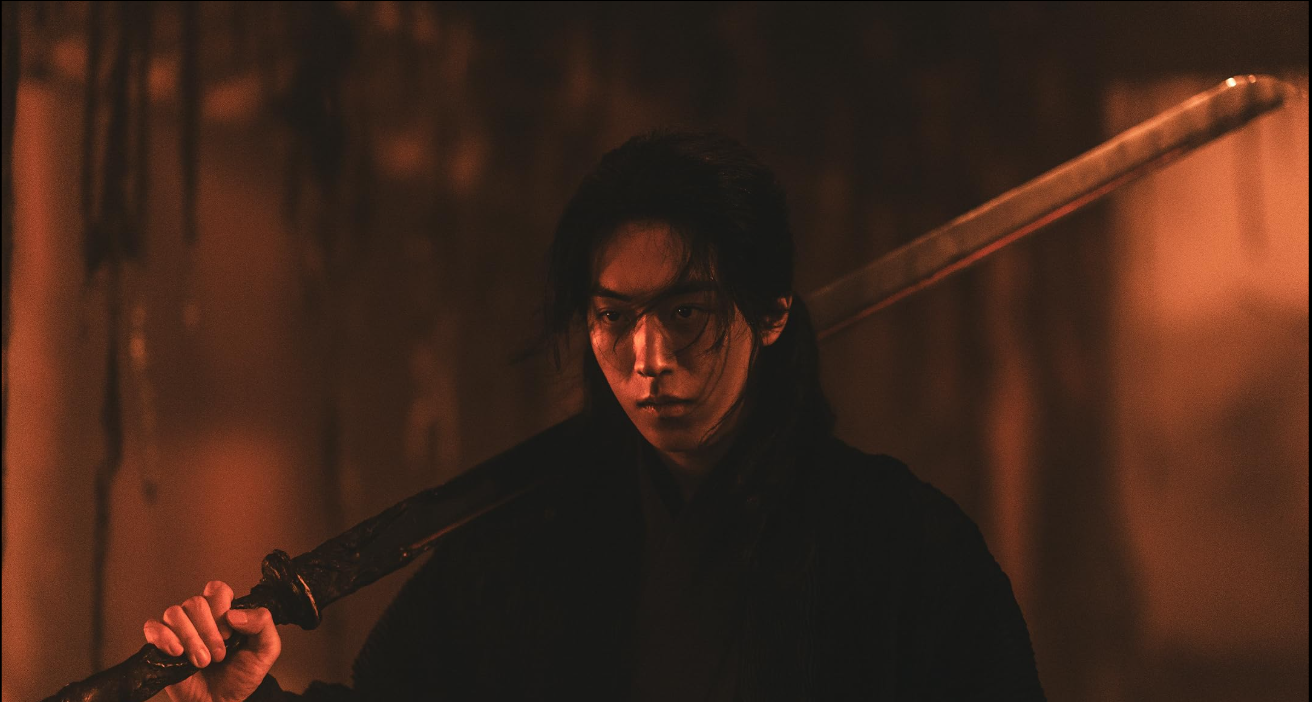
Nam Joo-hyuk swings a sword at spirits, Roh Yoon-seo talks to the dead, and the palace has more skeletons than a medical school. Here’s our full spoiler-light review of Netflix’s newest K-horror obsession.
If you’ve spent the last few days doom-scrolling for your next Korean drama fix, congratulations! the algorithm has done its job, and The East Palace just landed on your watchlist. Released globally on Netflix on July 17, 2026, this eight-episode dark fantasy series has already got viewers whispering about it the way its characters whisper to ghosts: constantly, and slightly nervously.
Directed by Choi Jung-kyu (of The Devil Judge fame) and written by Kwon So-ra and Seo Jae-won — the duo behind the cult favorite Bulgasal: Immortal Souls, The East Palace (originally titled Donggung, 동궁) arrives with a pedigree that horror-fantasy fans will recognize immediately. Add a cast led by Nam Joo-hyuk, Roh Yoon-seo, and Cho Seung-woo, and you’ve got a show that was engineered in a lab to trend on social media.
What’s It About?
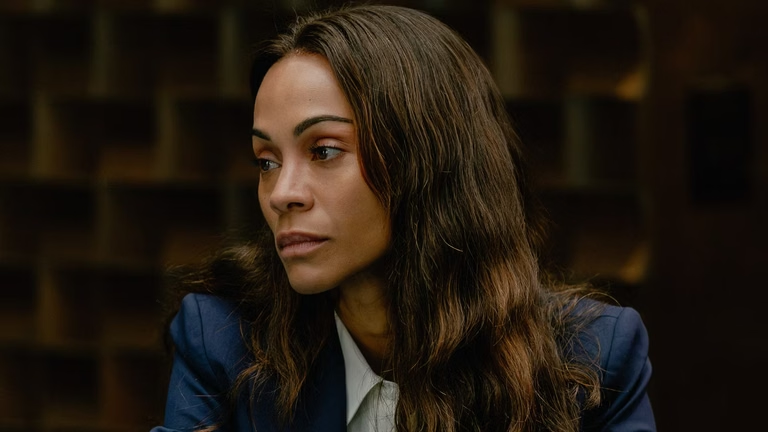
Set in a fictional Joseon-era kingdom, the story follows Gu-cheon (Nam Joo-hyuk), an insufferably confident ghost-slayer who can literally turn into a spirit himself to fight other spirits, which is either a brilliant power or a mid-life crisis, depending on how you look at it. He’s paired up with Saeng-gang (Roh Yoon-seo), a court lady who hears the voices of the dead and is definitely hiding something (aren’t they always?).
Together, on the king’s orders, they’re sent to investigate a string of mysterious deaths plaguing the royal princes, a horrifying echo of a nearly identical massacre that happened thirty years earlier and put the current king, played with delicious ambiguity by Cho Seung-woo, on the throne. Naturally, nobody in this palace can be trusted, everybody has an agenda, and the family tree looks less like a tree and more like a crime board with red string.
The Good: Atmosphere, Visuals, and a Whole Lot of Vibes
If there’s one thing critics universally agree on, it’s that this show looks stunning. Reviewers have pointed to its cinematography, which leans into dim lighting, muted colors, and sweeping palace sets to build an eerie, elegant mood, with the contrast between royal grandeur and the terrifying spirit realm reinforcing the show’s mix of historical drama and supernatural horror. Basically, every frame looks like it belongs on a moodboard titled “haunted royalty aesthetic,” and the visual effects apparently know when to show off and when to get out of the way.
The soundtrack gets its own round of applause too, it’s been called a standout element that amplifies the tension and emotional stakes of key scenes. So yes, keep your headphones on; this is not a background-noise kind of show.
Critics have also drawn comparisons that will either excite you or make you groan, depending on your patience for genre mashups. One outlet described it as essentially Stranger Things meeting Kingdom, mixing the eerie mystery and creature horror of the former with the political palace intrigue of the latter into something that still manages to feel fresh and thrilling. Another reviewer was blunter about the inspiration, admitting the show clearly borrows from Stranger Things but arguing that’s not automatically a bad thing especially when Nam Joo-hyuk’s screen presence is doing a lot of the heavy lifting.
The Not-So-Good: Slow Burns and Déjà Vu
Not every critic is fully sold. The South China Morning Post’s review landed on the more skeptical end, awarding the series 2.5 out of 5 stars and noting that while the show dazzles visually and leans into satisfying period horror, it suffers from a lack of originality and an overly tangled mythology, which, translated from critic-speak, means: it looks incredible, but you might need a flowchart to keep track of who’s dead, who’s a ghost, and who’s just having a bad week.
Leisurebyte’s review echoed similar themes but with more warmth, calling it an ambitious mystery that layers Joseon-era political intrigue with folklore-heavy supernatural horror, resulting in a haunting and visually captivating watch for anyone who likes their ghost stories seasoned with a healthy dose of court conspiracy.
Meanwhile, Sportskeeda’s take was reassuring for anyone worried about a slow start, concluding that the series is worth watching thanks to its engaging storytelling and strong performances, even if the sheer number of twists won’t land for every viewer. So consider yourself warned: this is a show that rewards patience and punishes anyone who checks their phone mid-episode.
The Verdict
So, is The East Palace worth the eight-episode commitment? Almost every review lands somewhere between “genuinely great” and “flawed but fun,” which, in Netflix K-drama terms, basically guarantees a second season announcement. One reviewer summed up the appeal perfectly, admitting their soft spot for lead actor Nam Joo-hyuk may have tipped the scales, ultimately landing on a 3.5-out-of-5 rating and a genuinely great time watching it, despite conceding the show wears its influences a little too visibly on its sleeve.
Bottom line: if you want gorgeous production design, a broody sword-wielding ghost-hunter, palace politics dirtier than a Joseon-era backroom deal, and just enough jump-scares to make you side-eye your own hallway at night The East Palace delivers. Just don’t expect total originality, and maybe don’t binge it right before bed.
Rating: 3.5/5 — Haunting, handsome, and just a little derivative.
The East Palace is streaming now on Netflix, with all 8 episodes available.
About the Author