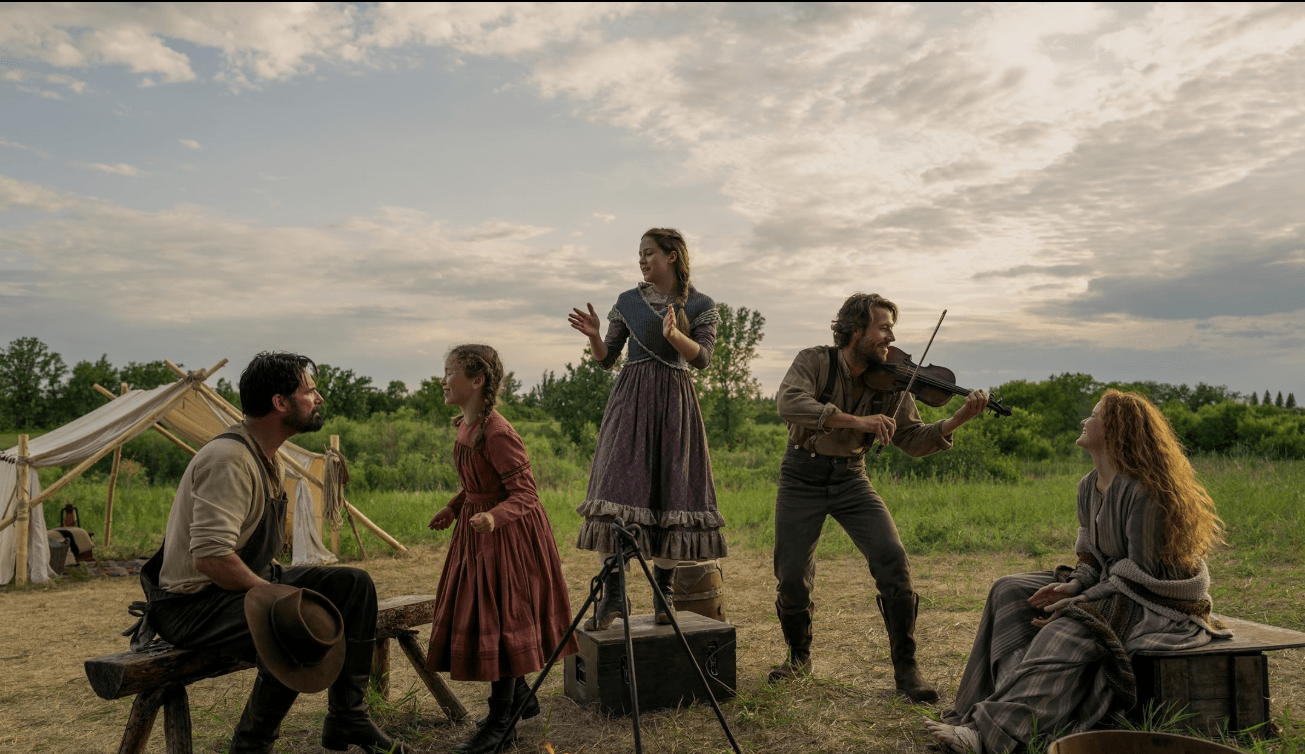
Little House on the Prairie 2026
Half-Pint is back, y’all, but she’s brought a whole new wagon train of changes with her.
Fifty-two years after Michael Landon first strolled across the opening credits in slow motion (you know the one), the Ingalls family has packed up the wagon again. Netflix’s 2026 reimagining of Little House on the Prairie landed on July 9, and it turns out that returning to the prairie after half a century is a bit like moving back into your childhood home: familiar in outline, but somebody’s definitely knocked down a wall or two.
So grab your bonnet, dust off the butter churn, and let’s dig into exactly how the new “Little House” differs from the beloved classic and why fans on both sides of the fence have strong feelings about a rocking chair.
The Quick Backstory
The original Little House on the Prairie ran on NBC from 1974 to 1983 for nine seasons, loosely based on Laura Ingalls Wilder’s classic books about her childhood in the late 1800s, following pioneer girl Laura Ingalls as her family navigated America’s westward expansion. It starred Michael Landon as Pa, Melissa Gilbert as Laura, Karen Grassle as Ma, and Melissa Sue Anderson as Mary, a cast so iconic that for a generation, “Pa” and “Michael Landon” were basically synonyms.
The 2026 version is an eight-episode Netflix series, developed and showrun by Rebecca Sonnenshine, starring Alice Halsey as Laura, Australian actor Luke Bracey as Pa, Crosby Fitzgerald as Ma, and Skywalker Hughes as Mary. The Ingalls family adjusts to frontier life after finding a new home near Independence, Kansas, land that still legally belonged to the Osage Nation, with settlers occupying it ahead of any formal government purchase (and eventually being ordered to leave as a result). It’s already been renewed for a second season before the first one even premiered, which is either supreme confidence or Netflix just really trusts a bonnet.
Now let’s get into the differences.
1. The Source Material: Books vs. “Vibes”
Here’s the plot twist nobody saw coming: the original 1974 show was actually pretty loose with the source material. According to one retrospective review, the original series drifted significantly from Laura Ingalls Wilder’s actual history, inventing fictional town rivalries, altering timelines, and skipping over harsher realities of frontier life documented in the books. Michael Landon’s series borrowed characters and ideas from the books, then gradually spun off into its own original storylines which is a diplomatic way of saying it eventually did whatever made for a good Very Special Episode.
The 2026 version flips that script entirely. Season 1 primarily adapts Little House on the Prairie itself, the third published novel in Wilder’s series, following the family’s move into Kansas, and reviewers have noted it’s a far more historically accurate take on the time period, the people, and the books themselves. So ironically, the “remake” is the more faithful adaptation, while the “original” was the one taking creative liberties. Sometimes the student becomes the teacher, and sometimes the teacher was just making it up as he went.
2. Setting: Walnut Grove Takes a Backseat
If you grew up on the original, “Walnut Grove, Minnesota” is basically burned into your soul. But the new series kicks off earlier in the family’s story, it opens on the Kansas frontier near Independence, around 1869–1871, rather than jumping straight to the Minnesota setting most fans associate with the show. (Plum Creek and Walnut Grove belong to a later chapter of Laura’s life; they don’t factor into this Kansas-set first season.) One comparison piece even noted that the biggest surprise arrives before the family even reaches what many viewers consider “home”, so if you’re waiting for the iconic little red schoolhouse, pack some patience along with your hardtack.
3. A Wider, More Honest Lens on History
This is probably the single biggest shift. The 1974 show was, by design, cozy: a weekly moral lesson wrapped in gingham. The 2026 version doesn’t throw that warmth out, but it does widen the camera. Reviewers point out that the new adaptation brings in the perspectives of Native American, Black, and mixed-race characters, painting a broader and more nuanced picture of westward expansion rather than treating it as purely the Ingalls family against a beautiful, empty landscape.
Laura’s storyline reflects this directly, her closest new friend is Good Eagle, a young Osage girl, tying Laura’s personal world to the very land dispute the season is built around. It’s a meaningful departure from a series that, fondly remembered as it is, wasn’t exactly known for centering Indigenous perspectives.
One reviewer summed up the balancing act nicely, noting the show carries the same morality lessons about community and kindness that made the original 1974 series beloved, while still being unafraid to show the messier parts of the story.
4. New Faces, New Baggage (Literally and Emotionally)
The 2026 cast also digs deeper into characters who existed in Wilder’s books but never got much room to breathe on screen. Take John Edwards, played by Warren Christie, a bachelor neighbor who helps the Ingalls family in the original novel. The Netflix version keeps him but adds a heavier, original layer: a moody Civil War veteran wrestling with alcoholism who clings to the Ingalls family like a lifeline. That’s a considerably weightier arc than “friendly neighbor who helps Pa build a barn,” which was more the original TV show’s speed.
Interestingly, star Melissa Gilbert – yes, the original Laura herself actually predicted this shift before the show even premiered, saying the new version aimed to “hew closer” to the books than the original did, adding that the source material was full of stories and people the original series simply never got around to.
5. Tone: Comfort Food vs. Cinematic Survival Drama
The original was appointment TV built for the whole family to watch together on a Monday night with low stakes, high hugs. The 2026 version leans into something closer to prestige drama. One outlet described it as less nostalgic comfort food and more a carefully crafted frontier drama that asks audiences to experience the prairie through a wider lens, contrasting the original’s comforting, lesson-of-the-week format with Netflix’s more cinematic, realism-grounded coming-of-age story.
Translation: less “Pa learns a valuable lesson about honesty by episode’s end,” more “Pa learns that frontier life will absolutely humble you, repeatedly, and there’s a wildfire in episode six.”
6. The Reception: Did It Work?
Here’s where it gets fun. During its opening week, the series landed at #2 on Netflix’s chart, behind only a true-crime anthology and ahead of shows like the latest season of Sullivan’s Crossing. As of this writing, it also holds a solid 77% critics’ score on Rotten Tomatoes from its first wave of reviews, respectable, if not a unanimous standing ovation. (Streaming charts and review aggregators shift over time, so treat these as a snapshot rather than a permanent scoreboard.)
Fan reaction has been the expected mixed bag. Some longtime fans have applauded Netflix for returning to the novels and embracing historical authenticity rather than simply remaking the classic scene for scene, while others are still mourning the absence of that theme song and the running-through-the-field opening credits. One review even preemptively shut down the discourse, arguing that any accusations of “wokeness” say more about the viewer than about what’s actually on screen, given the show tries to depict the ideals and flaws that shaped America “for good and bad.”
Even the original cast has expressed differing opinions about the reboot. Reports indicate most of the original stars haven’t been closely involved with the new project, though at least one has expressed hope of a future cameo, so never say never on a Pa Ingalls handoff scene.
So, Which One Should You Watch?
Honestly? Both, ideally with snacks. The 1974 original is a comfort-television time capsule, earnest, a little melodramatic, endlessly rewatchable on a rainy Sunday. The 2026 version is a more historically grounded, visually stunning, emotionally heavier retelling that trades some of that fuzzy nostalgia for a fuller, more complicated portrait of the frontier.
As one reviewer put it, the new show isn’t trying to replace the classic — it’s more of a companion piece, one that draws more heavily from Wilder’s books while the original remains the comforting television landmark built around weekly family lessons.
So whether you’re #TeamMichaelLandon or ready to give Half-Pint 2.0 a chance, one thing’s for sure: fifty years later, the prairie is still very much open for business.
Little House on the Prairie (2026) is streaming now on Netflix, with Season 2 already confirmed. The original 1974–1983 series is available on various streaming and rental platforms.
About the Author