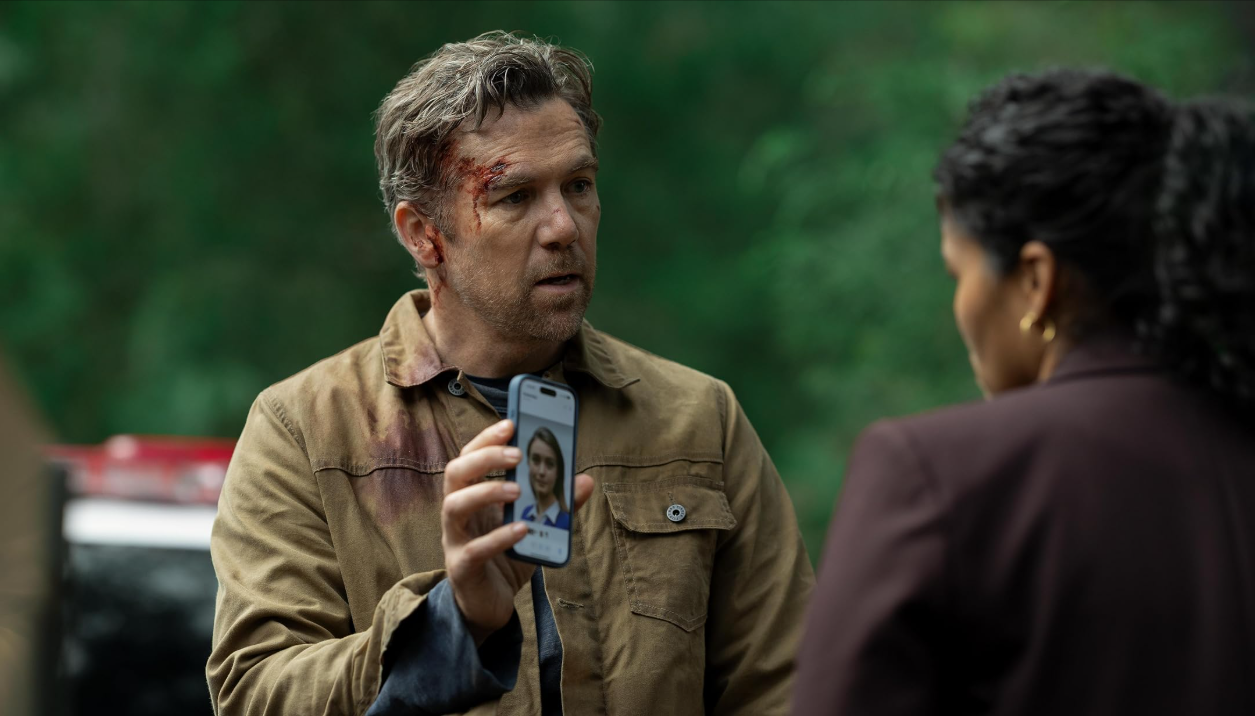
There’s a very specific kind of dread that comes from watching a man rebuild his entire life around a phone call that never comes. That’s Ian Ridley in a nutshell, and after the two-episode premiere of Apple TV’s Last Seen, it’s clear the wait was worth it mostly because the show had the audacity to make things worse before making them better.
If you haven’t watched “The Dispatcher” and “The Call” yet, bookmark this and come back. Everyone else, grab a coffee. This one’s a slow burn with a gut-punch ending, and we need to talk about all of it.
The Setup: Eleven Years of Unanswered Calls
Last Seen wastes zero time establishing its central wound. Eleven years ago, three-year-old Maggie Ridley vanished from her own home. No ransom note, no witnesses, no body. Just an absence that swallowed a family whole. Her father, Ian (Patrick Brammall), was a detective at the time. Now he’s an ex-detective, six months sober, and working as a 911 dispatcher, a job that lets him help strangers in crisis while quietly failing to process his own.
It’s a clever bit of character design, honestly. Give a man who couldn’t save his daughter a job where he saves other people’s daughters, sons, and neighbors every single shift, and watch him convince himself that’s the same thing as healing. It isn’t, and the show knows it isn’t, which is why Ian still hasn’t given his ex-wife Debbie the baby cot she keeps asking for. Some things you hold onto because letting go feels like admitting the calendar won.
Debbie, for her part, has moved forward in the way people are allowed to when they’re not the one who lost the child from a locked house. She’s remarried to Bill, she’s pregnant, and she’s trying gently, patiently to get Ian to do the same. He can’t. Or won’t. The show is careful not to make that distinction feel like a character flaw so much as a fact of grief.
Episode 1: The Dog, the Jaw, and the Longest Eleven Years
“The Dispatcher” opens with a cold open that immediately signals this show isn’t messing around: a man walking his dogs finds a human jaw. Rather than report it like a responsible citizen, he pockets his moral compass and walks away, because apparently that’s easier than dealing with a body. Naturally, someone else finds the rest of the remaining three kids, because kids in these shows always find the bodies and suddenly an eleven-year-old cold case is hot again.
Ian catches wind that the remains belong to a child roughly Maggie’s age, and every instinct he’s spent a decade trying to dull comes roaring back online. He shows up at the scene uninvited, which does not thrill Detective Isabella Pena, the officer now running point on the case. She’s sympathetic to his history, but sympathy and jurisdiction are different things, and she lets him know it. Still, she gives him a look at the site, mostly out of professional courtesy and partly because arguing with a grieving father in front of cameras is nobody’s idea of a good afternoon.
Here’s where the show earns its “detective at heart” reputation for Ian: he clocks paw prints in the mud near the remains, works backward to local dog owners, and lands right back at the doorstep of the man from the cold open. It’s a nice piece of procedural craftsmanship, the kind of scene that reminds you Ian didn’t lose his instincts, just his badge. Then the discovery of pajamas matching what Maggie was wearing the night she disappeared sends the entire investigation, and Ian’s fragile sobriety, into a tailspin.
By the time the DNA results come back, the audience is fully braced for a gut-punch. And the show delivers one just not the one anybody expected.
Episode 2: The Twist Nobody Asked For (But Everybody Needed)
Here’s the moment “The Dispatcher” swings hard and “The Call” catches you off guard: the remains aren’t Maggie’s. Detective Pena delivers the news to Ian directly, half-expecting him to quietly cancel the candlelight vigil he’d already planned for his daughter. He doesn’t. He keeps the vigil going anyway, hoping it’ll flush out a lead, which is either resourceful investigative thinking or a man refusing to let go of the one plan that gave him purpose that week. Possibly both.
It backfires. Pena tells Debbie the truth, and Debbie is furious to learn Ian knew the DNA result and let the memorial go ahead anyway. Dean Ian and Debbie’s son, and Maggie’s older brother, who was watching her the night she vanished isn’t thrilled either. Ian, now publicly humiliated and privately shattered, does the one thing that’s kept him upright for six months: he goes back to work, answering emergency calls, because helping strangers is easier than sitting with his own disaster.
Meanwhile and this is where Last Seen stops being a grief drama and starts becoming something closer to a slow-motion horror story where we meet Henry, Jenna, and their daughter Sarah. They live off the grid. Sarah has never been to school. She’s never left the property. If your internal alarm bells are already ringing, congratulations, your instincts are as sharp as Ian’s.
Sarah, restless the way any sheltered teenager would be, sneaks out with a boy named Tommy while her father is away at the vigil and her mother is resting off a migraine. It’s during this stolen moment of teenage rebellion that Sarah stumbles across a piece of the outside world that cracks her entire reality open: a vigil pamphlet with a name on it. “Mags.” It jars loose a memory she shouldn’t have of carving that same name into a tree.
By the end of episode two, Sarah has found a phone and made a desperate call, telling the man on the other end of the line that she might be Mags. Ian races to the location. She’s already gone by the time he gets there. The show never spells out a confirmation, but it’s hard to read that ending as anything other than the strongest possible hint: Sarah appears to be Maggie.
Why This Twist Actually Works
Plenty of missing-child dramas would’ve teased the “she’s alive” angle across an entire season and made you wait for a finale reveal. Last Seen torches that patience in episode two, and it’s the smartest decision the show makes early on. Instead of asking “is Maggie alive,” the premiere reframes the entire mystery around a much crueler question: what happens when a girl finds out her whole identity was built on someone else’s lie?
There’s also a genuinely unsettling shape forming under Henry and Jenna’s arc, one that hints at trauma response rather than random villainy, without the show tipping its hand on exactly what happened. Henry’s reaction to the flyer, and the memories now surfacing for both Jenna and Sarah, suggest there’s a specific, painful history behind this family that the show simply hasn’t revealed yet.
It’s a bold structural gamble for a six-episode limited series to blow through this much plot in its first ninety minutes. And with episode three, “The Lie,” reportedly digging deeper into that phone call and what Ian actually heard, it looks like the show is just getting started on turning the screws.
The Verdict
Last Seen premieres with the confidence of a show that knows exactly how much rope to give its audience before yanking it back. Patrick Brammall’s Ian is compelling precisely because he’s not written as a tortured genius detective; he’s a man clinging to routine and sobriety while chasing a hope everyone around him has quietly buried. And the Henry-Jenna-Sarah household adds a genuinely disturbing second engine to the story, one that doesn’t feel like a twist for twist’s sake but like a mirror held up to Ian’s own desperation to make things whole again.
Six episodes is a tight runway for a story this loaded, but if the premiere is any indication, Last Seen isn’t interested in padding. It’s interested in making you very uncomfortable, very quickly, and then daring you to look away.
You won’t.
Last Seen streams new episodes Wednesdays on Apple TV. Drop your theories on Henry, Jenna, and what really happened eleven years ago in the comments below, did Sarah just find out she’s Maggie, or is there another twist waiting?
About the Author